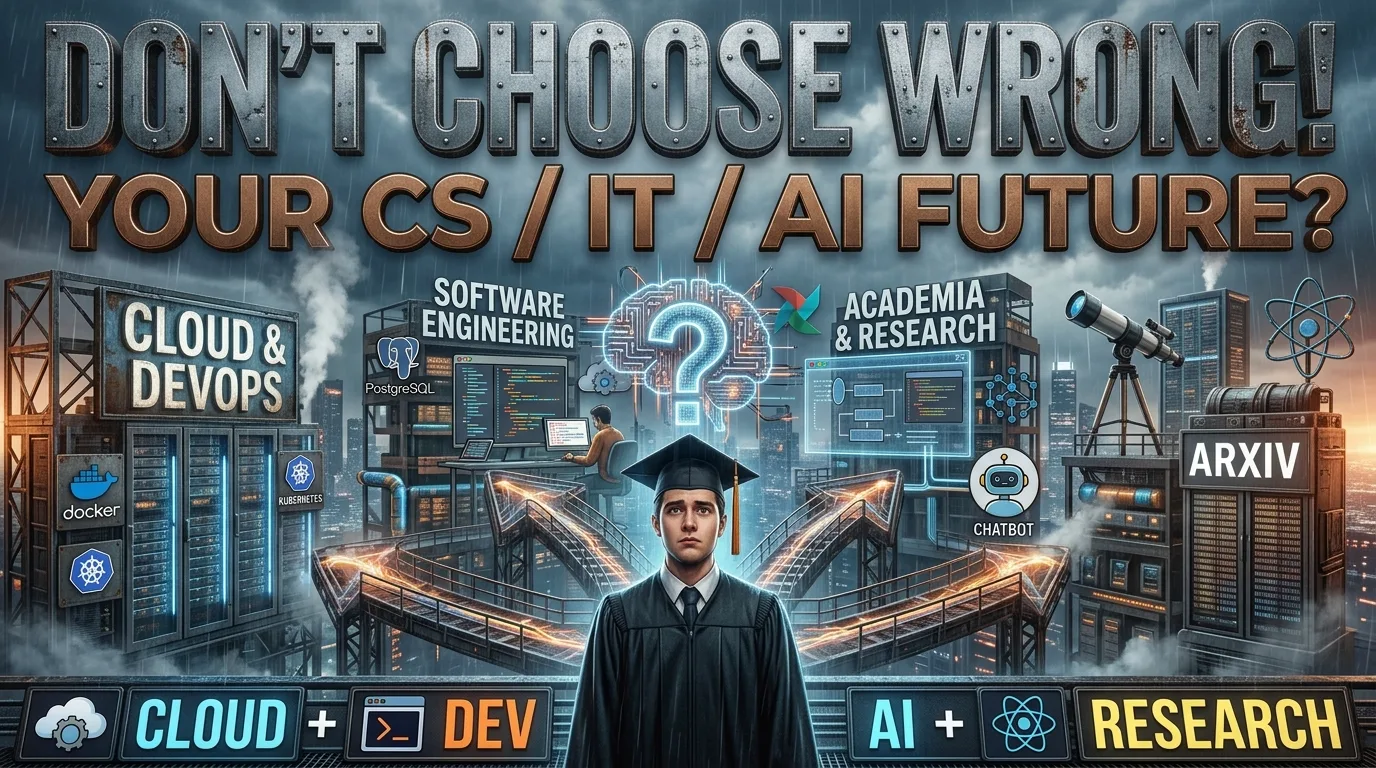
Hey man ! i am addressing this to myself , bro don't give up it might be the burden but it is what makes you !
Background :
Remember when you were the kid , maybe you don't . You struggled alot to walk , you tried , you fell , you tried again , you fell again, but you tried cause you were encouraged by your people and your parents. There was someone who kept you encouraged. You kept doing cause someone was watching you. Man sometimes one needs only a little support to keep you going. What happened now , are those eye not there to watch you , hand not there to support you . They are there , they listen to you, they help you out . They even not with you but are there . I don't know your situation but they are there you just have to feel the same way . They might be not giving you validation cause they feel you are grown and you are able to do all . So they have allot of expectations from you . don't let them down man . InCase they are not with you You still have to keepGoing cause they are watching you from somewhere else .
Overview of Post-Graduate Career Pathways:
Graduation with a degree in Computer Science, Artificial Intelligence, or Information Technology represents a pivotal transition from structured academic learning to self-directed professional development. In an academic setting, metrics of success are clearly defined through course syllabi, examination schedules, and structured project rubrics. In contrast, the post-graduate technical landscape requires individuals to independently identify high-value skill domains, navigate complex labor market dynamics, and establish personal accountability structures.
The technical workforce encompasses several distinct trajectories, ranging from enterprise software development and applied machine learning to academic research and autonomous software entrepreneurship. Selecting an optimal trajectory requires evaluating technical strengths, local and global market demands, financial requirements, and long-term professional aspirations.
Enterprise Software Engineering and Industrial Integration:
Entering the industrial technology market requires a strategic shift from broad theoretical understanding to specialized practical execution. Technology organizations primarily seek entry-level candidates capable of resolving specific operational challenges within existing software architectures.
Backend Systems and Data Infrastructure:
Backend engineering remains one of the most foundational and resilient career avenues within software technology. Practitioners in this domain design, construct, and maintain the server-side logic, database schemas, and API integration layers that power modern applications. Developing expertise in backend systems involves mastering a primary programming language—such as Python, Go, Java, or TypeScript—alongside a thorough understanding of asynchronous execution models, memory management, and process concurrency.
A critical component of backend infrastructure is relational and non-relational database management. Software engineers must achieve proficiency in schema normalization, indexing strategies, query execution plans, and transactional integrity using databases such as PostgreSQL or MySQL. Additionally, modern high-scale systems utilize caching layers like Redis and event streaming architectures powered by Apache Kafka or RabbitMQ to handle high throughput and ensure distributed system resilience.
Applied Artificial Intelligence and Machine Learning:
The rapid expansion of artificial intelligence has created specialized pathways for engineers capable of integrating probabilistic models into production systems. Rather than focusing solely on foundational model training—which is often reserved for specialized research labs—applied AI engineers focus on constructing Retrieval-Augmented Generation (RAG) pipelines, managing vector embeddings, and orchestrating complex multi-agent workflows using modern frameworks.
Data pipeline engineering forms the backbone of operational AI. Engineers must construct reliable Extract, Transform, Load (ETL) pipelines that clean, process, and ingest large volumes of structured and unstructured data. Tools such as Apache Airflow, Snowflake, and BigQuery are widely deployed to manage these workflows. Furthermore, deploying models to production requires knowledge of MLOps, encompassing model containerization, latency optimization, endpoint security, and live performance monitoring.
Cloud Computing and DevOps Engineering:
DevOps and cloud infrastructure engineering bridge the gap between software development and systems operations. Professionals in this discipline focus on automating deployment pipelines, ensuring high availability, and optimizing infrastructure costs across public cloud platforms such as Amazon Web Services, Google Cloud Platform, and Microsoft Azure.
Core competencies in DevOps include containerization using Docker and container orchestration using Kubernetes. Infrastructure as Code (IaC) tools, most notably Terraform, allow engineers to provision complex cloud environments programmatically. Continuous Integration and Continuous Deployment (CI/CD) pipelines, implemented through tools like GitHub Actions or GitLab CI, ensure that code modifications are automatically tested, validated, and deployed to production servers without manual intervention.
Advanced Academia, Research, and Specialization:
For graduates seeking to contribute to theoretical advancements, specialized scientific domains, or cutting-edge technical innovation, pursuing advanced academic degrees or engaging in open-source research represents a compelling pathway.
Graduate Education Frameworks
Pursuing a Master of Science (M.S.) or Doctor of Philosophy (Ph.D.) is particularly advantageous for fields characterized by high theoretical complexity, such as Computer Vision, Autonomous Robotics, Cryptography, and Advanced Natural Language Processing. Graduate programs provide structured access to specialized research laboratories, high-performance computing clusters, and mentorship from established academics.
Candidates evaluating graduate programs should focus on faculty research alignment rather than institutional prestige alone. Securing position funding—such as Graduate Research Assistantships (GRA) or Teaching Assistantships (TA)—can offset tuition costs while providing essential instructional and research experience. Advanced degrees frequently serve as direct prerequisites for specialized research scientist roles within industrial research divisions.
Independent Research and Technical Publication
Formal university enrollment is no longer the sole venue for conducting impactful research. Independent researchers actively contribute to the scientific community by deconstructing recent literature on open platforms like arXiv, re-implementing algorithms in open-source repositories, and publishing detailed technical analyses. Contributing to major open-source infrastructure projects—such as deep learning libraries, database engines, or operating system kernels—provides verifiable proof of advanced technical competence.
Freelancing, Contracting, and Software Entrepreneurship
Independent contracting and software entrepreneurship offer alternatives to conventional corporate employment, allowing engineers to monetize technical capabilities directly while retaining operational autonomy.
High-Value Technical Services
Successful freelancing relies on positioning technical skills around specific business outcomes rather than general programming services. Contractors who deliver targeted solutions—such as business workflow automation, custom data extraction pipelines, and proprietary enterprise search implementations—command significantly higher rates than generalist developers.
| Workflow Automation | n8n, Make, Python, Webhook Integrations | Reduces operational expenditure by automating manual data transfer tasks. |
| Data Extraction & Pipelines | Playwright, Scrapy, PostgreSQL, Proxies | Delivers structured datasets for competitive intelligence and market analysis. |
| Enterprise AI Integration | LangChain, OpenAI API, Vector Databases | Automates internal document search and customer support workflows. |
| Custom API Development | FastAPI, Node.js, Docker, Payment Gateways | Enables seamless software communication and custom transaction processing. |
Micro-SaaS and Product Development
Building independent software products involves identifying specific, underserved software needs within niche markets. A successful micro-SaaS product addresses a focused problem for a well-defined audience, requiring minimal infrastructure overhead. Developers should emphasize rapid prototyping, launching functional Minimum Viable Products (MVPs) quickly to gather user feedback before investing heavily in architecture expansion.
Strategic Execution and Professional Momentum
Technical capability must be coupled with disciplined execution and effective communication to achieve sustained career momentum. Navigating the post-graduate phase effectively involves establishing systematic habits for project development, application tracking, and personal resilience.
Constructing Verifiable Proof of Work
In a competitive hiring landscape, practical demonstration of skill carries greater weight than formal credentials alone. Software engineers should focus on building a concise portfolio consisting of two or three production-grade applications. Each project should feature clean, documented source code on GitHub, containerized setup procedures, unit and integration tests, and a deployed, publicly accessible web demonstration.
Systematic Career Development Framework
A structured approach to career execution over a ninety-day horizon provides clarity and measurable progress. During the first thirty days, individuals should focus on defining a singular specialization, auditing existing codebases, and reinforcing core fundamentals such as data structures and system design principles. The second thirty days should focus on deploying live applications, tailoring resume assets for specific technical roles, and initiating direct professional outreach. The final thirty days focus on technical interview practice, portfolio iteration, and pursuing parallel avenues such as freelance consulting or independent product experimentation.
Conclusion
The transition following graduation is fundamentally a process of establishing personal agency. By converting external expectations into structured daily action, engineering graduates can successfully navigate the complexities of the modern technology landscape and build a meaningful, enduring professional career.